
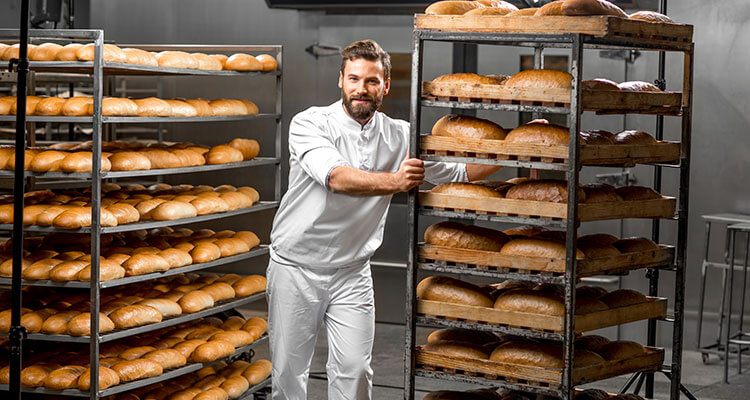
Walk into any thriving bakery or pastry kitchen in Perth and the ovens get all the attention. But talk to the people actually running production, and a different piece of equipment comes up just as often: cold storage. Dough, dairy, and delicate fillings all live or die on temperature control long before anything reaches the oven.
For bakeries scaling beyond a single shopfront — supplying cafes, wholesaling to retailers, or running a commercial kitchen behind multiple outlets — cold storage stops being a background detail and becomes a genuine production bottleneck if it isn’t sized and managed properly.
Why Baking Is More Temperature-Sensitive Than It Looks
Fermentation is at the heart of most baking, and fermentation is entirely temperature-driven. Slow-proofed sourdough, laminated pastry, and enriched doughs all need precise, stable conditions to develop properly — and even a few degrees of variation can throw out fermentation timing across an entire production run.
Add dairy-based fillings, custards, and fresh cream products into the mix, and the margin for error narrows further still. Perth’s warmer months make this even harder, with ambient kitchen temperatures easily climbing high enough to accelerate fermentation unpredictably or put dairy components at risk.
Bakeries commonly run into:
- Dough proofing inconsistently because ambient kitchen temperature fluctuates
- Limited space to hold dairy, cream, and filling stock separately from bulk ingredients
- Seasonal spikes in demand around events, holidays, and wedding cake season
- Frozen par-baked or pre-portioned stock needing dedicated freezer capacity
Scaling Cold Storage Alongside Wholesale Growth
Many bakeries start life with domestic-grade fridges that were never designed for commercial volume, and upgrading to commercial refrigeration systems is often one of the first steps needed to support wholesale production and consistent temperature control. That setup might just cope with a single shopfront, but the moment wholesale accounts or a second location enter the picture, storage capacity becomes the limiting factor on how much business the kitchen can actually take on.
Rather than committing to a full permanent build before growth is locked in, an increasing number of bakery operators are choosing to hire and buy cool rooms as wholesale volume ramps up. It means production capacity can grow in step with new accounts, rather than a bakery either turning away orders or overcommitting to fixed infrastructure it isn’t yet using fully.
Separating Proofing Stock From Bulk Ingredient Storage
One of the most common inefficiencies in growing bakery kitchens is running proofing stock, dairy, and bulk dry ingredients through a single cold space. Doing this makes it almost impossible to hold the tighter temperature band that active fermentation needs without compromising everything else sharing the same room.
Bakeries that separate these functions — one space dedicated to active proofing and dairy, another for general bulk storage — see far more consistent results across batches. This is where trialling cool rooms for hire Perth ahead of a permanent fit-out pays off, letting a kitchen work out exactly what temperature zones it actually needs before locking anything in.
Frozen Capacity for Par-Baked and Pre-Portioned Stock
Freezer capacity plays a different but equally important role. Par-baked goods, pre-portioned pastry, and bulk-prepped fillings all rely on reliable frozen storage to bridge the gap between busy and quiet production periods, letting a kitchen build up stock ahead of predictable demand spikes rather than scrambling on the day.
For bakeries without the capital tied up in a dedicated commercial freezer, a properly insulated freezer room hire Perth option gives that same production flexibility without the upfront cost, and it can be scaled back once seasonal demand eases.
Treating Cold Storage as Part of the Production Plan
The bakeries that manage growth well tend to plan cold storage the same way they plan ingredient orders and staff rosters — as a variable that shifts with the season, not a fixed asset that was right five years ago and has just been left as-is since. They think through proofing schedules, dairy handling, and frozen buffer stock together, rather than treating refrigeration as an afterthought bolted onto whatever space happens to be left in the kitchen.
Getting this right early avoids the far more painful alternative: turning down wholesale orders, or watching quality slip on a hot afternoon because the proofing room simply wasn’t built for the volume now running through it.
As Perth’s bakery and pastry scene keeps growing, the operators treating cold storage as core production infrastructure — not a background utility — are the ones best placed to scale without fermentation consistency becoming the thing that holds them back.