Industrial innovation has always served as the primary catalyst for economic transformation. From the introduction of steam power and mechanized looms during the first industrial revolution to the widespread deployment of automation and modern computational tools, every major technological leap has fundamentally altered how goods are designed, produced, and distributed.
In the contemporary economy, industrial innovation goes far beyond simple machinery upgrades or localized factory floor improvements. It encompasses advanced manufacturing methodologies, smart industrial ecosystems, material science breakthroughs, and entirely new digital business models. When companies integrate novel engineering concepts with operational agility, they do not just refine existing workflows; they create completely new industries, redefine customer value propositions, and open multi-billion-dollar market opportunities across global supply networks.
The Convergence of Physical Systems and Digital Intelligence
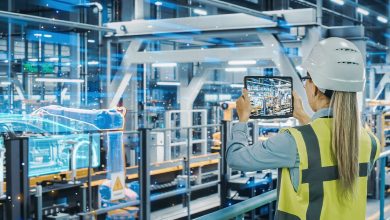
The boundary between physical manufacturing assets and digital architecture has largely dissolved. This integration, often referred to as cyber-physical systems, enables machinery to communicate, evaluate operating conditions, and adjust parameters with minimal human intervention.
-
Smart Factory Architectures: Modern production plants leverage interconnected sensors, edge computing nodes, and cloud analytics to monitor machinery performance continuously. By analyzing operational data streams in real time, facilities maximize throughput, reduce scrap rates, and dynamically adjust manufacturing lines to accommodate custom product variations without halting operations.
-
Industrial Internet of Things (IIoT): The mass deployment of low-power industrial telemetry allows global operators to track assets from raw material extraction to final delivery. This heightened transparency eliminates operational blind spots, lowers logistics friction, and enables businesses to guarantee precise delivery timelines to downstream partners.
-
Autonomous Material Handling: Facilities increasingly utilize autonomous mobile robots, automated guided vehicles, and smart warehouse routing to handle internal component logistics. These technologies reduce labor bottlenecks, improve floor safety, and accelerate fulfillment cycles.
Advanced Additive Manufacturing and Distributed Production
Traditional manufacturing paradigms have long relied on subtractive processes, such as machining down metal blocks, or formative processes, such as high-volume injection molding. These classical methods require massive capital expenditures for tooling and enforce long production runs to achieve unit-cost efficiency. Additive manufacturing, commonly known as industrial 3D printing, removes these geometric and economic constraints.
Rapid Prototyping and Complex Geometric Fabrication
Additive manufacturing constructs parts layer by layer directly from digital computer-aided design files.
-
Topology Optimization: Engineers can create lightweight, bio-inspired lattice structures that maintain high tensile strength while using thirty to fifty percent less raw material. This capability is particularly transformative for aerospace, automotive, and defense sectors where weight savings translate directly to energy efficiency.
-
Consolidation of Multi-Part Assemblies: Additive techniques permit complex assemblies that previously required dozens of individual stamped and welded components to be printed as a single monolithic unit. This eliminates assembly labor, reduces failure points, and simplifies supply chain logistics.
On-Demand and Distributed Manufacturing Models
By decoupling production from centralized mega-factories, additive technologies allow enterprises to build localized manufacturing hubs near end consumers.
-
Elimination of Physical Warehouse Spare Parts: Companies can maintain digital inventories of replacement parts, printing components on demand only when a customer places an order. This dramatically lowers warehouse holding costs and reduces the risk of unsold inventory obsolescence.
-
Mass Customization at Scale: Medical device manufacturers, dental laboratories, and specialized equipment producers can manufacture bespoke, patient-specific implants or custom machinery attachments at costs comparable to mass-produced alternatives.
Material Science Breakthroughs Unlocking Novel Sectors
Every major industrial era is defined by the materials available to its engineers. Recent breakthroughs in chemistry, nanotechnology, and metallurgy have introduced advanced materials that withstand extreme operational conditions while delivering superior electrical, thermal, and mechanical properties.
-
Advanced Composite Materials: Carbon-fiber reinforced polymers, ceramic matrix composites, and metal matrix composites provide exceptional strength-to-weight ratios and corrosion resistance, replacing heavy steel alloys in marine, wind energy, and structural civil applications.
-
Graphene and Nanomaterials: Incorporating two-dimensional nanomaterials into existing coatings, plastics, and metals dramatically improves electrical conductivity, thermal dissipation, and tensile strength, enabling the next generation of flexible electronics, high-capacity batteries, and ultra-durable industrial coatings.
-
Bio-Based and Biodegradable Polymers: As environmental regulations tighten and consumer preferences shift toward circular sustainability, industrial chemical firms are producing bio-resins derived from agricultural waste. These materials mimic the physical properties of traditional petroleum-based plastics while offering fully industrial-compostable end-of-life cycles.
The Servitization of Industrial Business Models
Industrial innovation does not only transform physical equipment; it reshapes commercial transaction structures. Traditionally, industrial manufacturers operated on linear transactional models: build a machine, sell it to a customer, and occasionally provide paid repair services when components failed. Today, digital connectivity enables servitization, often structured as equipment-as-a-service (EaaS).
Moving from Capital Expense to Operational Value
Servitization aligns the economic incentives of the equipment manufacturer with the operational goals of the equipment user.
-
Outcome-Based Pricing: Instead of purchasing a multi-million-dollar compressed air unit, industrial gas turbine, or heavy printing press upfront, customers pay solely for the functional output consumed, such as cubic feet of compressed air, hours of turbine uptime, or square footage printed.
-
Predictive Lifecycle Maintenance: Connected equipment streams operating data back to the original manufacturer. Specialized analytical teams monitor wear patterns and schedule component replacements before failures occur, guaranteeing agreed service level agreements and minimizing unplanned downtime for the client.
-
Predictable Recurring Revenue: For manufacturers, shifting from volatile, one-off capital equipment sales to recurring subscription and usage contracts stabilizes cash flow, deepens customer retention, and creates opportunities to upsell software upgrades and advanced tooling continuously.
Sustainable Industrial Processes and the Circular Economy
Global imperatives to reduce carbon footprints, minimize industrial water usage, and conserve critical finite minerals have catalyzed intense green industrial innovation. Rather than treating environmental compliance purely as a regulatory cost, proactive enterprises use circular economy methodologies to uncover profitable new revenue streams.
-
Closed-Loop Manufacturing: Industrial plants design production lines where manufacturing scrap, cooling water, and process heat are captured and reintroduced directly into the system. Excess thermal energy from heavy casting furnaces, for example, is redirected to power district heating networks or generate on-site steam electricity.
-
Advanced Material Recycling and Recovery: The expansion of the battery and electronics sectors has spurred specialized recycling industries capable of extracting high-purity lithium, nickel, cobalt, and precious metals from retired hardware at lower emissions and costs than traditional virgin mining.
-
Electrification of High-Heat Industrial Processes: Developing industrial-scale electric arc furnaces, plasma torches, and industrial heat pumps allows steel mills, glass manufacturers, and chemical producers to replace fossil-fuel combustion with clean electrical power, unlocking contracts with carbon-conscious enterprise buyers.
Frequently Asked Questions
How does industrial innovation help legacy manufacturing firms stay competitive against agile digital startups?
Legacy manufacturing firms possess valuable institutional knowledge, established global supply chains, regulatory certifications, and strong enterprise balance sheets that startups cannot easily duplicate. By adopting modern industrial innovations like automated robotics, cloud enterprise platforms, and additive manufacturing into their existing operational footprint, legacy companies can achieve the speed and agility of digital startups while leveraging their massive physical distribution networks.
What is the primary difference between basic industrial automation and intelligent manufacturing?
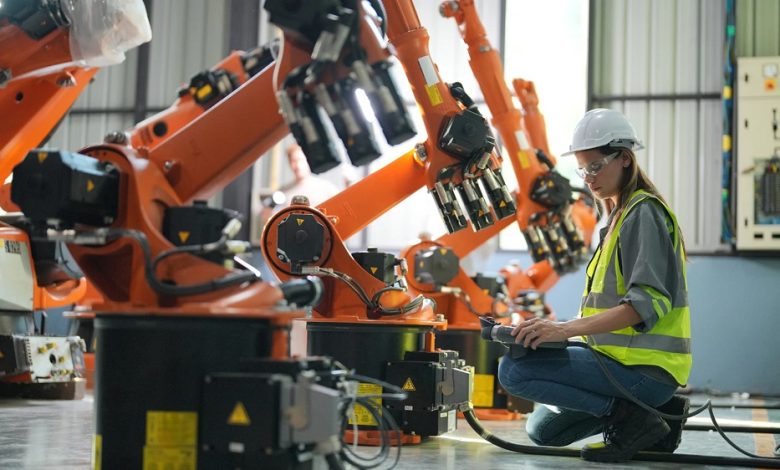
Basic industrial automation relies on fixed, pre-programmed logic to execute repetitive, single-axis tasks, such as a robotic arm spot-welding the same car panel repeatedly. Intelligent manufacturing integrates sensory inputs, machine learning models, and real-time connectivity, allowing systems to perceive their environment, diagnose errors autonomously, adapt to unexpected material variations, and optimize their own production parameters without requiring human reprogramming.
How does industrial innovation affect workforce employment dynamics and job creation?
While automation reduces the demand for repetitive, low-skilled manual labor on factory floors, it dramatically increases the demand for skilled technical professionals. Industrial innovation creates high-paying roles for robotics technicians, industrial software developers, automation maintenance specialists, data analysts, and material engineers. The overall result is a shift from manual physical tasks to advanced technical management and system optimization roles.
Why do companies struggle to scale industrial pilot projects into full factory deployments?
Companies frequently encounter what is known as pilot purgatory because small-scale laboratory or single-cell tests fail to account for the complexity of full-scale factory environments. Scaling requires overcoming legacy software integration hurdles, training a broad workforce across multiple shifts, establishing reliable data governance protocols, and managing the significant capital investment needed to retool entire production lines simultaneously.
How does digital twin technology create new business value in heavy industries?
A digital twin is a dynamic, virtual replica of a physical asset, system, or complete production plant, updated continuously with real-time operational telemetry. Engineers use digital twins to run virtual stress tests, simulate process alterations, identify operational bottlenecks, and evaluate maintenance needs without risking physical downtime or damaging expensive machinery on the live production line.
What role do open industrial standards and interoperability protocols play in market expansion?
Proprietary, closed software ecosystems lock manufacturing plants into single-vendor solutions, which stifles innovation and inflates integration costs. Open industrial communication protocols, such as OPC Unified Architecture (OPC UA) and MQTT, establish standardized data translation layers. This interoperability allows hardware and software from different manufacturers to communicate seamlessly, lowering integration barriers and fostering a competitive marketplace for specialized industrial applications.
How can small and mid-sized industrial enterprises afford to adopt advanced manufacturing technologies?
Small and mid-sized enterprises can adopt advanced technologies without heavy upfront capital investments by utilizing modular automation cells, retrofitting existing machinery with plug-and-play IIoT sensors, and taking advantage of equipment-as-a-service leasing models. Additionally, regional manufacturing extension partnerships and targeted government innovation grants provide subsidized technical expertise and financing to accelerate technology adoption.