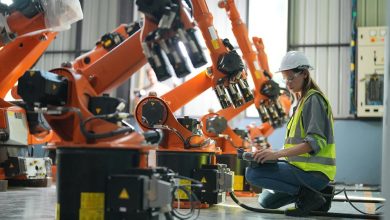

Industrial enterprises rely heavily on physical infrastructure, heavy machinery, automated production lines, and complex distribution networks. These capital assets represent significant balance-sheet investments, and their performance directly governs an organization’s bottom line. When critical machinery fails unexpectedly, the consequences extend far beyond immediate repair costs. Unplanned downtime disrupts supply chains, leads to contractual delivery penalties, endangers worker safety, and diminishes customer trust.
Industrial asset management is the systematic process of operating, maintaining, upgrading, and decommissioning physical assets cost-effectively throughout their operational lifecycles. Modern industrial operations can no longer afford to treat maintenance as a reactive troubleshooting function. Achieving operational excellence requires adopting forward-looking, data-driven frameworks that extend equipment life, maximize overall equipment effectiveness, and align daily maintenance routines with broad strategic business goals.
Developing a Comprehensive Asset Inventory and Hierarchy
A sound asset management strategy cannot be built on fragmented knowledge or outdated spreadsheets. Organizations must first establish total visibility over every physical asset operating within their facilities.
-
Asset Register Creation: Establish a centralized, digital inventory documenting all physical assets. Each record must capture critical attributes, including equipment make, model, serial number, physical location, date of commissioning, expected design life, warranty specifications, and original capital expense.
-
Hierarchical Asset Structuring: Organize assets into an intuitive structural hierarchy following international standards such as ISO 55000. Structure equipment from top-level enterprise entities down to individual sites, functional production areas, primary equipment units, sub-assemblies, and replaceable wear components.
-
Standardized Tagging and Identification: Implement uniform physical labeling across all plant assets using barcodes, QR codes, or Radio Frequency Identification (RFID) tags. Physical tags ensure field technicians can instantly pull up verified maintenance records, operating manuals, and parts diagrams via mobile devices.
Asset Criticality Ranking and Risk Assessment
Not all industrial machines carry the same operational weight. Treating a minor exhaust fan with the same maintenance intensity as a primary turbine leads to misallocated resources and higher operational costs. Establishing an asset criticality ranking allows plant managers to deploy labor and capital where failure would cause the greatest disruption.
The Criticality Assessment Matrix
Asset criticality must be evaluated across multiple dimensions rather than relying solely on the replacement cost of the machine.
-
Production and Throughput Impact: Does the unexpected stoppage of this asset halt the entire production line, or can upstream and downstream buffers absorb the interruption?
-
Safety and Environmental Liability: Could an uncontained mechanical failure cause hazardous material leaks, toxic emissions, structural fires, or severe workplace injuries?
-
Financial and Capital Risk: What is the total cost of an unexpected failure when factoring in emergency shipping for replacement parts, overtime labor, lost production units, and regulatory non-compliance fines?
-
Lead Time and Sourcing Complexity: Are replacement components readily available off the shelf, or do they require specialized fabrication with multi-month manufacturing lead times?
Transitioning from Reactive to Predictive Maintenance
Traditional run-to-failure approaches are among the most expensive ways to operate an industrial facility. Elite industrial operations systematically progress through maintenance maturity levels to eliminate unplanned disruptions.
-
Reactive Maintenance (Run-to-Failure): Equipment runs until an active breakdown occurs. While acceptable for non-critical, easily replaceable items like standard light fixtures or small utility pumps, it creates unacceptable risks for core operational systems.
-
Preventative Maintenance (Time-Based): Maintenance tasks and component replacements occur at fixed calendar intervals or operating hour thresholds based on original equipment manufacturer guidelines. While superior to reactive repairs, time-based maintenance often leads to the premature replacement of healthy components or fails to catch sudden mechanical anomalies between inspection windows.
-
Condition-Based Monitoring: Real-time operating parameters determine when intervention is needed. Technicians monitor dynamic physical indicators, such as operating temperatures, fluid pressures, and electrical draw, scheduling repairs only when measurements drift beyond baseline tolerances.
-
Predictive Maintenance (PdM): PdM uses connected Internet of Things (IoT) sensors and machine learning models to identify microscopic failure signatures before operational degradation begins. Analyzing vibration spectra, acoustic ultrasound emissions, and oil particulate accumulation enables facilities to predict failures weeks or months in advance, scheduling corrective work during planned changeovers.
Managing Spare Parts Inventory and Supply Chains
A reliable maintenance strategy requires having the right replacement parts available at the right moment without tying up excessive working capital in idle warehouse inventory. Poor parts management frequently causes extended machine downtime while teams wait for emergency component shipments.
Modern Materials Management Tactics
-
Min-Max Inventory Control: Establish dynamic minimum reorder points and maximum stocking thresholds based on historical usage rates, asset criticality, and supplier lead times. Adjust these parameters regularly to reflect shifting supply chain realities.
-
Critical Spares Identification: Identify high-risk parts with long lead times that belong to Tier 1 critical machinery. Maintain these items on-site regardless of immediate turnover rates to safeguard against multi-week plant outages.
-
Vendor-Managed Inventory (VMI): Partner with key component distributors who monitor stock levels remotely and restock consumable items automatically, reducing internal administrative burdens and holding costs.
-
Obsolescence and Preservation Audits: Regularly inspect stored parts for environmental degradation. Rotate stored electric motors to prevent bearing flat spots, monitor rubber seals for dry rot, and replace obsolete parts before the parent equipment is phased out.
Centralized Enterprise Asset Management and CMMS Integration
Modern industrial maintenance requires a unified software backbone. Computerized Maintenance Management Systems (CMMS) and Enterprise Asset Management (EAM) platforms act as central hubs for operational data, work orders, and lifecycle planning.
-
Automated Work Order Workflows: Move away from paper work orders and verbal repair requests. Centralized platforms automatically generate, schedule, and assign maintenance tickets based on sensor alarms, hours of operation, or calendar schedules.
-
Mobile Field Enablement: Equip maintenance technicians with ruggedized tablets or mobile smartphones. Technicians can log work order progress in real time, capture photographs of damaged parts, review electrical schematics, and check spare parts availability without walking back to a central control office.
-
Maintenance History and Failure Tracking: Documenting every repair, root cause, and replaced part builds a searchable institutional knowledge base. When similar anomalies occur in the future, technicians can quickly review previous resolutions.
Cultivating a Culture of Total Productive Maintenance
Asset reliability is not the sole responsibility of the maintenance department. High-performing facilities implement Total Productive Maintenance (TPM), engaging machine operators directly in routine equipment care.
-
Autonomous Maintenance by Operators: Train machine operators to perform basic daily inspections, lubrication, cleaning, and filter replacements. Because operators spend entire shifts interacting with their equipment, they are often the first to notice unusual vibrations, subtle squeaks, or minor temperature increases.
-
Continuous Root Cause Analysis (RCA): When unexpected failures occur, cross-functional teams comprising operators, maintenance personnel, and process engineers must conduct formal RCA exercises, such as the Five Whys or Fishbone Diagrams. Eliminating the underlying structural cause prevents recurring failures.
-
Standardized Operating Procedures (SOPs): Document explicit, unambiguous SOPs for both machine operation and maintenance procedures. Standardizing startup, shutdown, and cleaning protocols reduces human errors that degrade equipment over time.
Frequently Asked Questions
What is the primary difference between a CMMS and an EAM platform?
A Computerized Maintenance Management System (CMMS) focuses primarily on daily maintenance operations, work order scheduling, equipment service histories, and spare parts tracking. An Enterprise Asset Management (EAM) platform is a broader enterprise system that encompasses full CMMS maintenance capabilities while adding comprehensive financial tracking, procurement management, lifecycle cost analysis, capital investment planning, and regulatory compliance features across all business sites.
How does overall equipment effectiveness (OEE) relate to industrial asset management?
Overall Equipment Effectiveness is a foundational performance metric that measures the percentage of planned manufacturing time that is genuinely productive. OEE evaluates three distinct operational factors: Availability (downtime losses), Performance (speed or cycle time losses), and Quality (defective parts produced). An effective asset management program directly increases OEE by minimizing unplanned downtime, ensuring machinery runs at optimal design speeds, and preventing equipment wear that causes manufacturing defects.
What are the key non-destructive testing techniques used in industrial maintenance?
Key non-destructive testing (NDT) techniques include vibration analysis to detect misalignments and bearing degradation, infrared thermography to locate electrical hotspots and thermal leaks, airborne and structure-borne ultrasound to identify compressed air leaks and early friction, oil analysis to track particulate contamination and chemical breakdown, and magnetic particle or dye penetrant testing to identify surface micro-cracks in structural components.
How should an enterprise calculate the lifecycle cost of a physical asset?
Lifecycle costing involves tracking the total cost of ownership across all phases of an asset’s existence. The calculation includes initial acquisition and installation expenses, ongoing operational energy and utility costs, routine preventive and corrective maintenance outlays, spare parts consumption, downtime losses, and eventual decommissioning, removal, and disposal costs, offset by any realized salvage or scrap value.
What is the bathtub curve in industrial reliability engineering?
The bathtub curve is a graphical representation of the failure rate of industrial equipment over time. It features three distinct phases: an initial infant mortality stage with higher early failure rates due to manufacturing defects or installation errors, a long useful life stage characterized by a low, constant, random failure rate, and a final wear-out stage where aging, metal fatigue, and physical deterioration cause failure rates to climb steeply.
How does an organization determine whether to repair or replace an aging industrial asset?
The decision involves comparing the net present value of continuing maintenance and lost production against the capital expenditure of acquiring modern machinery. Key indicators favoring replacement include escalating maintenance costs that surpass sixty percent of replacement value, continuous production bottlenecks caused by slow cycle times, total supplier obsolescence of replacement parts, non-compliance with updated safety regulations, or significant energy inefficiencies compared to modern alternatives.
Why does improper machine lubrication account for a high percentage of mechanical failures?
Lubrication failure is a leading cause of premature equipment breakdown due to friction, thermal breakdown, and contaminant entry. Common issues include applying incorrect grease or oil viscosities, mixing incompatible chemical formulations, introducing dirt particles during application, or over-greasing bearing housings, which generates excessive internal heat and causes seal blowouts. Establishing strict lubrication schedules and using dedicated, labeled application tools eliminates these common errors.